
Sun Damage and Brown Spots: Undoing Years in a Few Sessions

Those brown spots, patches and freckly clusters that appear across the face, hands and chest are the visible record of years of sun. The reassuring news is that much of that damage can be undone, often faster than you would expect. Here is what sun damage really is, and how modern treatments fade brown spots and brighten your skin.
What sun damage actually is
Every time your skin meets ultraviolet light without protection, it responds by producing extra melanin and, over years, that shows up as uneven tone, brown spots, dullness, rough texture, broken capillaries and fine lines. Skin professionals call it photoaging, and it accounts for a large share of what we think of simply as ageing. The good part is that because it is damage your skin accumulated, much of it can be gradually reversed with the right help.
Brown spots, explained
The flat tan to dark brown marks often called sun spots or age spots are clusters of excess pigment left by cumulative sun exposure. They tend to appear on the areas that catch the most light, the cheeks, forehead, backs of the hands, chest and shoulders. In the vast majority of cases they are a harmless cosmetic concern rather than anything medical, which is why they respond so well to treatments designed to break up and fade pigment.
An important safety note
While most brown spots are harmless, your skin deserves a careful eye. Any spot or mole that changes in size, shape or colour, has irregular borders, bleeds, or simply looks different from the others should be checked by a doctor rather than treated cosmetically. A reputable clinic will always flag anything that needs medical attention first. Fading pigment is for the harmless marks, never a substitute for proper assessment of a suspicious one.
Can sun damage really be reversed?
To a very satisfying degree, yes. Treatments can lift away accumulated pigment, break up stubborn brown spots, and prompt the skin to renew itself more evenly, while also improving the texture and dullness that come with photoaging. People are often surprised at how much younger and fresher sun exposed skin can look after a course of treatment. You cannot un live your summers, but you can genuinely undo much of how they show on your skin.
The treatments that work
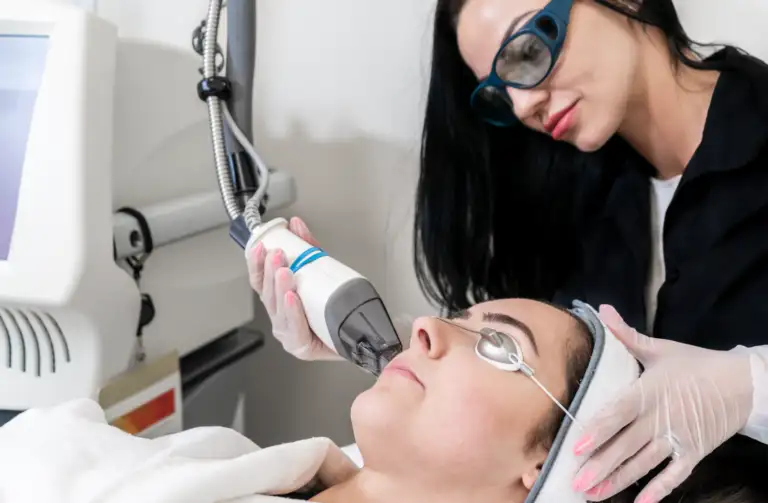
A few approaches do the heavy lifting, often in combination. Intense pulsed light, also called a photofacial, is a star performer for brown spots and sun related redness. Lasers target stubborn or deeper pigment. Chemical peels lift surface discolouration and brighten overall tone, and resurfacing treatments smooth the texture and fine lines that accompany sun damage. Your specialist chooses and sequences these based on exactly what your skin needs.
How a photofacial fades brown spots
This is the one people find most striking. During an intense pulsed light treatment, the light energy is absorbed by the excess pigment in your spots. Over the following days those spots often darken, come to the surface and then flake away, leaving clearer, more even skin behind. Many people see a meaningful difference in just a few sessions, which is why it is such a popular choice for sun damaged skin.
Daily sunscreen is not optional when treating sun damage. Without it, new pigment forms as fast as you fade the old, and your results slip away. Think of SPF as the part of the treatment you do every single morning.
How many sessions and how long
Many people notice visible improvement quickly, with a short series delivering the fullest, most even result. The exact number depends on how much pigment there is and which treatments are used, so your specialist will map a realistic plan at your consultation. Deeper pigment and texture take a little longer, but the overall journey is usually measured in a handful of sessions rather than endless ones.
Prevention is the other half
Undoing sun damage only lasts if you protect your investment. Daily broad spectrum sunscreen, reapplied when you are outdoors, plus hats and shade during peak hours, prevent new spots forming and keep your brighter, more even skin that way. Treatment clears the past, good habits protect the future.
Learn how we treat brown spots and sun damage and book a consultation to undo years of sun.
Key takeaways
- Sun damage shows as brown spots, dullness, texture and fine lines
- Most brown spots are harmless, but have any changing spot checked by a doctor
- Photofacials, lasers and peels fade pigment and brighten skin in a few sessions
- Daily sunscreen prevents new damage and protects your results
Frequently asked questions
Can sun damage be reversed?
To a large degree, yes. Treatments can fade accumulated pigment, clear brown spots and renew the skin, visibly improving the tone, texture and dullness left by years of sun.
What causes brown spots on the face?
They are clusters of excess melanin produced in response to cumulative ultraviolet exposure, appearing most on the areas that catch the most sun, such as the cheeks, hands and chest.
How do you get rid of sun spots?
Intense pulsed light photofacials, lasers and chemical peels break up and fade the pigment over a short series, while daily sunscreen stops new spots forming.
Are brown spots or sun spots dangerous?
Most are a harmless cosmetic concern. However, any spot that changes in size, shape or colour, has irregular borders or bleeds should be checked by a doctor rather than treated cosmetically.
How many treatments will I need?
Many people see visible improvement in just a few sessions, with the exact number depending on how much pigment there is and which treatments are used.
How do I prevent sun damage?
Wear a broad spectrum sunscreen every day and reapply it outdoors, seek shade during peak hours, and cover up. Prevention protects both your skin and your treatment results.